
Invoice vs Bill: A Quick Answer First
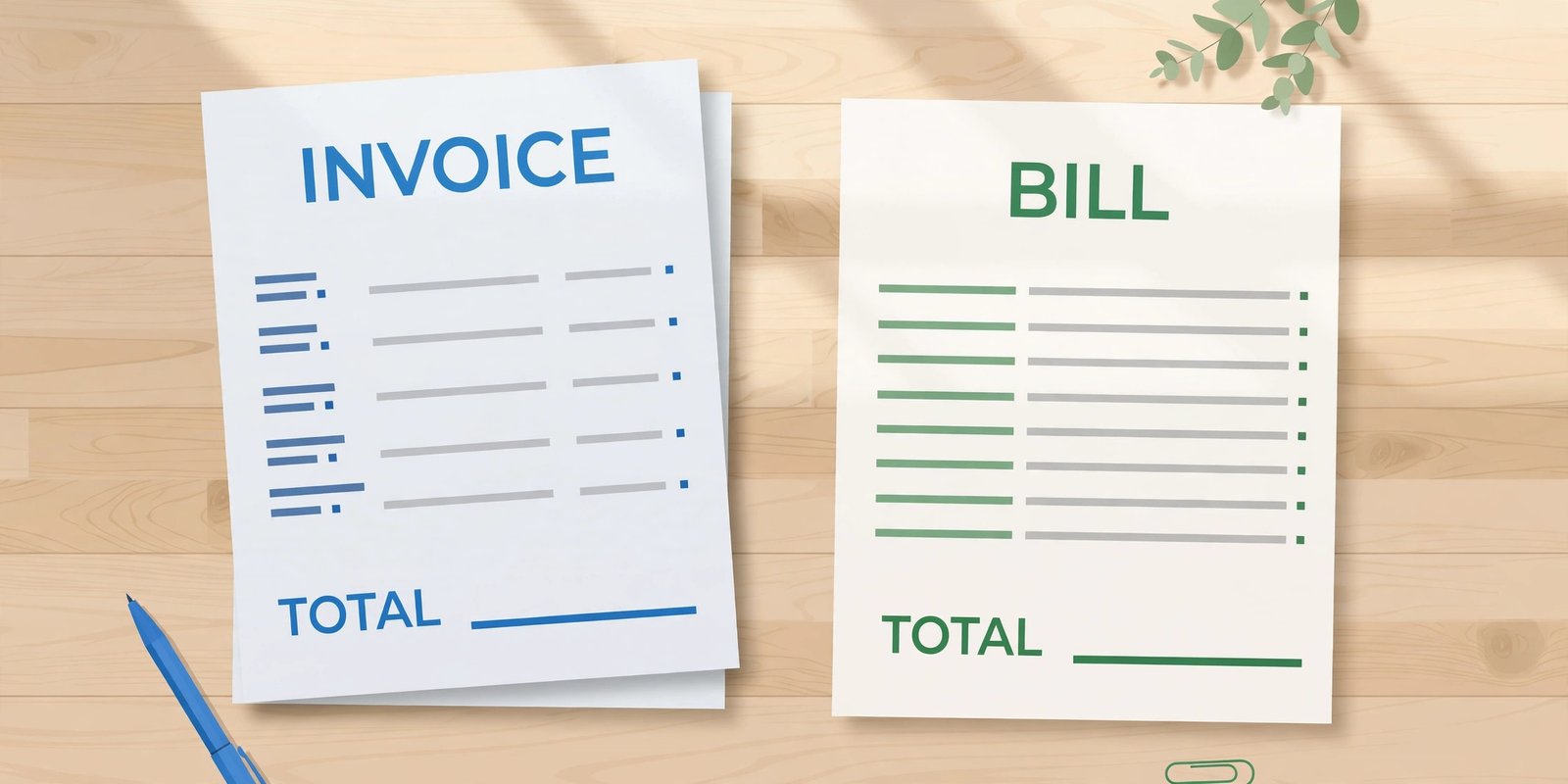
An invoice is a document a seller sends to ask for payment. A bill is the same document seen from the buyer’s side — it is what you receive when someone asks you to pay. Same piece of paper, two different viewpoints.
If that sounds confusing, you are not alone. “Invoice vs bill” is one of the most searched questions in small business finance, because people use the two words as if they are identical — and half the time, they are. The real difference is about who is holding the document.
Think of it like a restaurant. The restaurant hands you a bill at the end of the meal. From the restaurant’s side, that same paper is an invoice — their record of what you owe them. One document, two names, depending on which side of the table you sit on.
In this guide, you will learn exactly what each term means, when to use each one, where the words differ by region, and the common mistakes that cost small businesses time and money. And if you need to send one right now, you can create a free invoice in minutes — no sign-up needed.

What Is an Invoice?
An invoice is a formal request for payment that a seller sends to a buyer. It lists what was sold, how much it costs, and when the payment is due. It is issued after the work is done or the goods are delivered — never before.
A proper invoice usually includes:
- The seller’s name and contact details
- The buyer’s name and address
- A unique invoice number
- The date it was issued and the due date
- A line-by-line list of goods or services
- Taxes and the total amount due
- Payment instructions (bank details, payment link, etc.)
Example: A freelance designer finishes a logo for a client and sends an invoice for $500, due in 14 days. The designer calls it an invoice because she is the seller asking for money.
Invoices are the seller’s paper trail. They prove what was sold, when, and for how much — which is why accountants love them. If you want to see how an invoice differs from proof of payment, read our guide on invoice vs receipt.
What Is a Bill?
A bill is a document you receive asking you to pay for something. From the receiver’s perspective, the seller’s invoice becomes their bill. It contains the same information — what you bought, the total, and the due date — but the roles are flipped.
In everyday life, “bill” is the word most people actually use. You get a bill from your phone company, a bill at a restaurant, a bill for your electricity. Businesses are a little different: when a company receives a request for payment from a supplier, the accounting team usually calls it a “bill” in their books (as in “accounts payable”), while the supplier who sent it called it an invoice (their “accounts receivable”).
Example: That same freelance designer’s client opens the email, sees the $500 request, and files it as a bill to pay by the end of the month. The document never changed — only the point of view did.
Invoice vs Bill: The Key Differences
Here is the full comparison in one table.
| Point of comparison | Invoice | Bill |
|---|---|---|
| Who sends it | The seller (asking for payment) | The seller (received by the buyer) |
| Who receives it | The buyer/customer | You, as the buyer |
| Point of view | Seller’s document | Buyer’s document |
| Purpose | Request payment, record a sale | Record an expense, remind you to pay |
| Timing | Sent after goods/services delivered | Received after purchase |
| Accounting term | Accounts receivable (money in) | Accounts payable (money out) |
| Common usage | Business-to-business, freelancers | Everyday consumer life, restaurants, utilities |
| Can they be the same paper? | Yes — an invoice sent by a seller is a bill received by a buyer. | |
So when is the difference real, and when is it just words? The difference is real in bookkeeping: your invoicing software tracks the invoices you send out, and your expense system tracks the bills you need to pay. Mixing them up in your accounts is how payments get missed.
A Simple Real-World Example
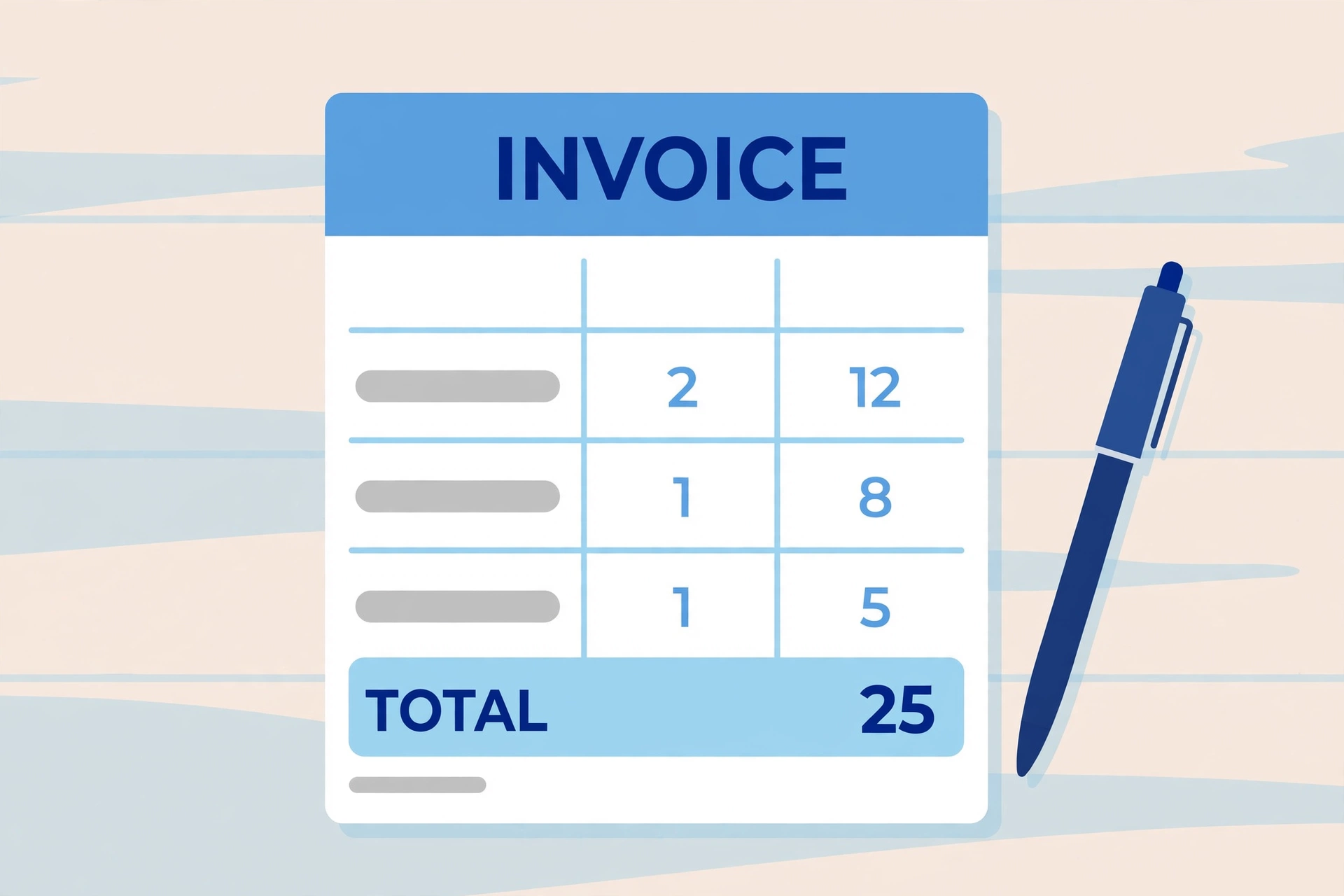
Imagine you run a small coffee shop. Every month, your milk supplier sends you a document for $800 — from your side, that is a bill. You enter it in your books and pay it by the 10th. Now imagine you cater an office party for $1,200. You send the office manager a document asking for that money — from your side, that is an invoice. In one week, you were both a buyer and a seller. The words changed, but the document format stayed the same.
Regional Differences: Who Says What?
The words also change by country, which adds to the confusion:
- United States: Both words are common. “Invoice” sounds more formal and is used in business; “bill” is used everywhere else (the phone bill, the restaurant bill).
- United Kingdom: “Invoice” is standard in business. People say “bill” too, but invoices carry more formal weight — especially for VAT records.
- India, Pakistan, Middle East: “Invoice” is the standard business word; “bill” is common in everyday speech and retail (you ask a shopkeeper for the bill).
- Australia: Similar to the UK — invoices for business, bills for everyday expenses.
The takeaway: if you are writing to a client in a formal business context, call it an invoice. If you are reminding a friend or customer in casual terms, bill is fine.
How Invoices and Bills Fit With Other Documents
Invoices and bills do not live alone. They sit in a chain of business documents, and knowing where each one sits helps you avoid mixing them up:
- Quote/estimate — what you might pay (before the work)
- Proforma invoice — a preliminary invoice, not a real payment request yet (see proforma invoice vs invoice)
- Invoice — the real payment request (after the work)
- Bill — that same invoice, seen by the buyer
- Receipt — proof the payment was made (after the payment)
Get this order right and your records will always make sense.
Common Mistakes to Avoid
Small businesses trip over these five mistakes more than any others:
- Calling a quote an invoice. A quote is a guess before the work. An invoice is a demand after the work. Sending a “quote” that looks like an invoice confuses clients and delays payment.
- Sending a bill when you mean to send an invoice. If you are the seller, label the document an invoice. Calling it a bill makes you look unprofessional and can confuse your own bookkeeping.
- No due date. A request without a due date is a suggestion, not a deadline. Every invoice and bill should state exactly when payment is expected.
- Forgetting the invoice number. Without a unique number, you cannot track which requests are paid and which are not. Number every invoice you send.
- Ignoring received bills. Every invoice someone sends you is a bill you owe. File them on the day they arrive and set reminders — late fees on unpaid bills add up fast.
Quick Checklist: Which Word Should You Use?
- You sold something and want to be paid → send an invoice
- You bought something and must pay → you received a bill
- Writing to a client in formal business English → invoice
- Talking about everyday expenses (phone, food, utilities) → bill
- Recording money coming in (accounts receivable) → invoice
- Recording money going out (accounts payable) → bill
Frequently Asked Questions
Is an invoice the same as a bill?
Almost. An invoice is what the seller sends; a bill is what the buyer receives. They are the same document seen from opposite sides. In accounting, “invoices” usually mean money owed to you, while “bills” mean money you owe others.
Can I use the words invoice and bill interchangeably?
In casual conversation, yes — most people will understand you. In business, be precise: send invoices to your customers and pay the bills you receive. Using the right word keeps your records clean and looks professional.
Which is more formal: invoice or bill?
Invoice. It is the standard term in business, accounting, and tax records. “Bill” is common in everyday life (restaurant bills, phone bills) but sounds informal in a business letter.
What is the difference between an invoice, a bill, and a receipt?
An invoice asks for payment (seller’s view), a bill is that same request seen by the buyer, and a receipt proves the payment was already made. Invoice and bill come before payment; a receipt comes after.
Do I need to send an invoice, or can I just send a bill to my client?
Send an invoice. As the seller, “invoice” is the correct and professional term. Your client will file it on their end as a bill. Using an invoice template with your business name, an invoice number, and a due date gets you paid faster.
Need to Send an Invoice? Do It Free, Right Now
Now you know the difference — put it to work. If you are the seller, the next step is simple: send a proper invoice with a clear total, a due date, and your payment details.
You can create a free invoice with NexBillio in just a couple of minutes. It is completely free, needs no sign-up, and gives you a clean, professional invoice you can download or share straight away. No confusion, no mistakes — just a document that gets you paid.
1 thought on “Invoice vs Bill: Are They the Same Thing?”