
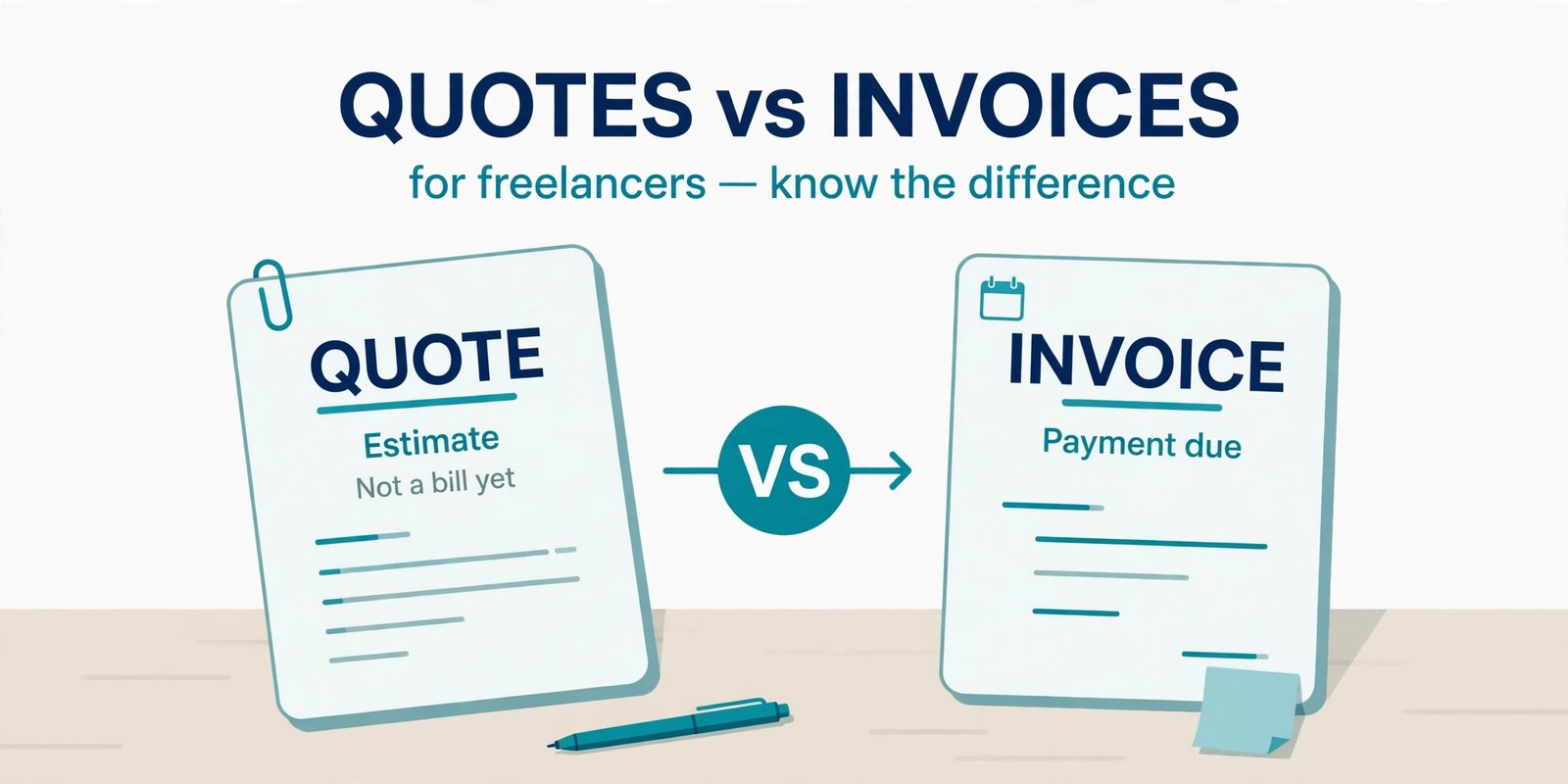
A client asks: “How much will this cost?” You send them a number. A week later, the job is done and you send another document asking for payment — and that switch is exactly what quote vs invoice is about. Simple, right?
But many freelancers mix these two documents up. They send an invoice before the client has agreed to the price, or they send a quote after the work is finished and wonder why payment is late.
The fix is simple: quote vs invoice comes down to two different documents with two different jobs. In this guide, you will learn exactly what each one is, when to send it, and how to turn a quote into an invoice without retyping everything.
What Is a Quote?
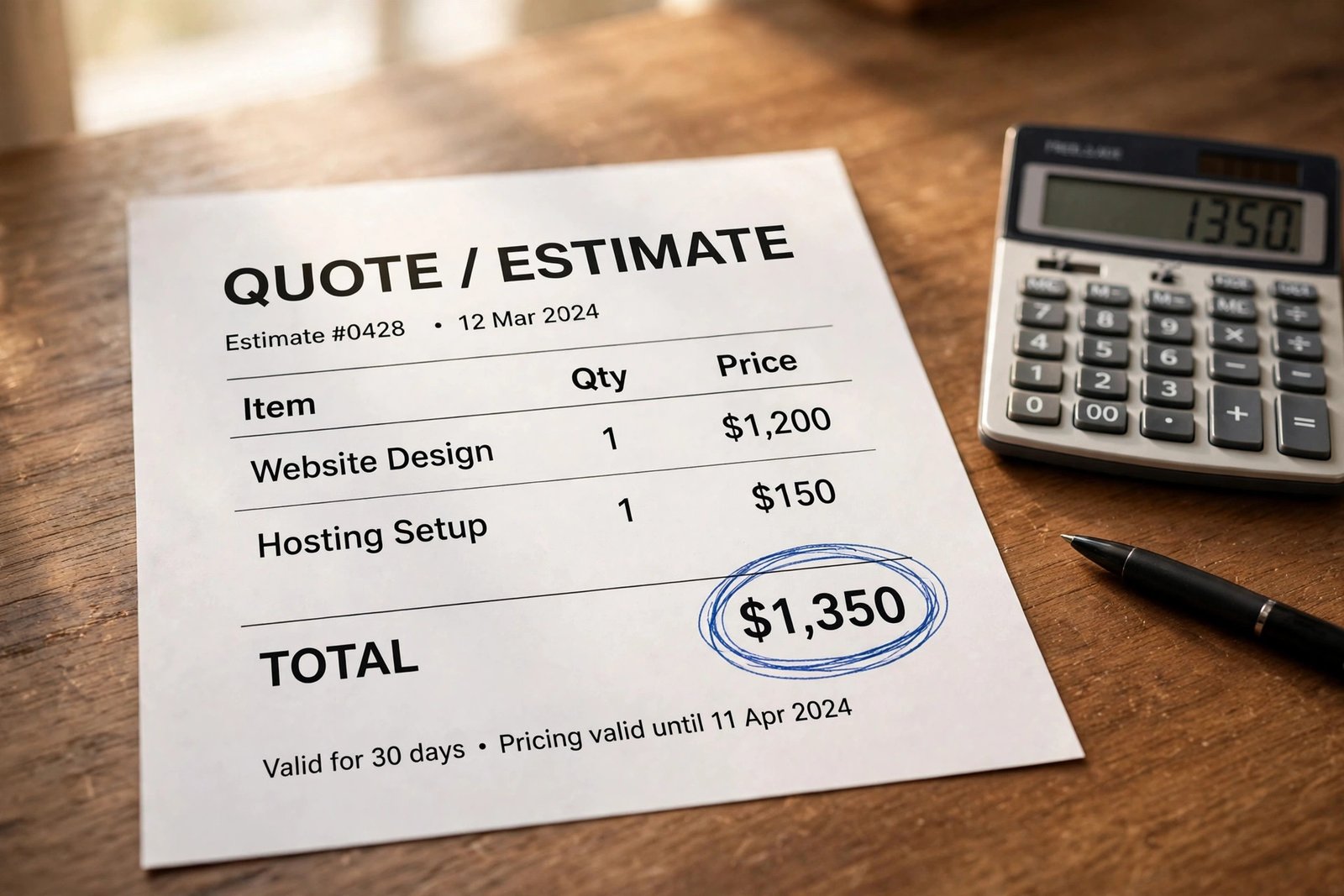
A quote (also called a quotation or an estimate) is a document that tells a client what a job will cost before any work starts.
Think of it like the price tag in a shop window. It answers one question: “If I hire you, how much will I pay?”
A good quote includes:
- Your business name and contact details
- The client’s name
- A quote number and the date
- A list of the work you will do (line items with prices)
- The total cost
- How long the price stays valid (for example, “valid for 30 days”)
- Any terms, like “50% deposit required”
A quote is not a demand for payment. The client cannot pay a quote — they can only accept it or ask you to change it. Once they accept it, you start the work.
Example: A web designer sends a quote for $1,350 to build a website. The client reads it, agrees, and says “let’s do it.” No money changes hands yet.
What Is an Invoice?
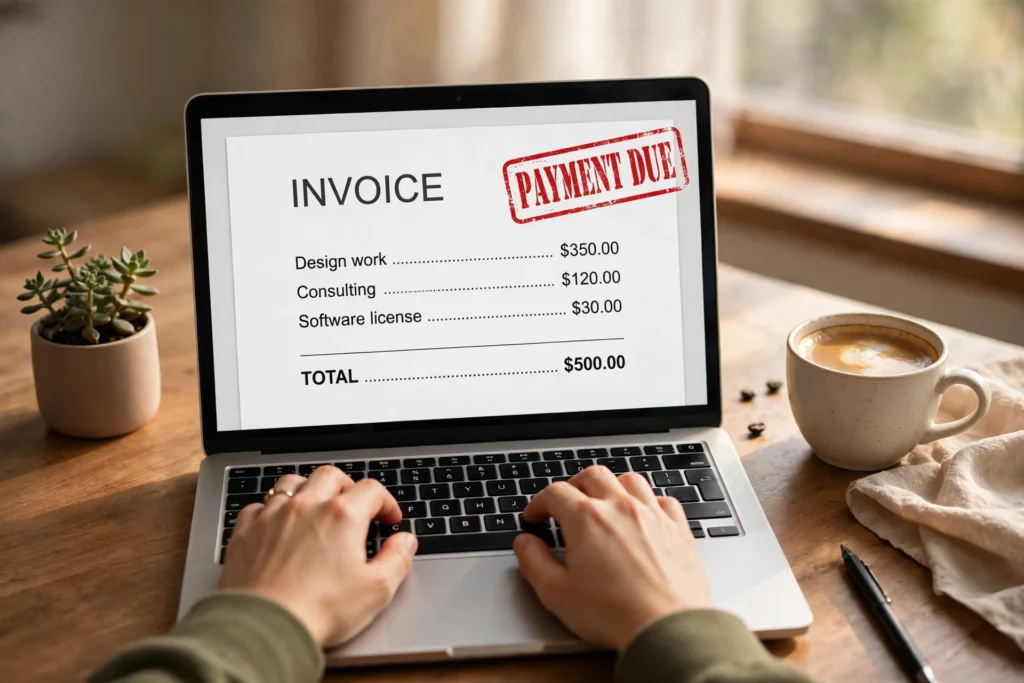
An invoice is a document that asks a client for payment after the work is done (or after you reach an agreed milestone).
If the quote was the price tag in a shop window, the invoice is the bill the waiter brings at the end of the meal.
A good invoice includes:
- Your business name and contact details
- The client’s name
- An invoice number and the date
- A list of the work you did (line items with prices)
- The total amount due
- The payment due date (for example, “due within 14 days”)
- How to pay (bank details, payment link, and so on)
- Any late-payment terms
Unlike a quote, an invoice is a demand for payment. It tells the client exactly how much to pay and when.
If you want to make this step fast and free, you can create a free invoice with our invoice generator — no sign-up needed.
Quote vs Invoice: The Key Differences
Here is the side-by-side view of quote vs invoice:
| Quote | Invoice | |
|---|---|---|
| Purpose | States the expected price before work | Demands payment after work |
| When you send it | Before the job starts | After the job is done (or per milestone) |
| Does the client pay it? | No — they accept or negotiate it | Yes — this is the bill |
| Price | An estimate or a fixed offer | The final amount owed |
| Valid-until date | Yes (“valid for 30 days”) | No — instead, a payment due date |
| Legal weight | Usually not binding (unless stated) | A formal payment request, often binding |
The simplest memory trick: a quote looks forward (“here is what it will cost”), an invoice looks back (“here is what you owe”).
This same idea shows up with other billing documents too. If you want the full picture, read our guide on invoice vs receipt — receipts are what you send after payment, the step after the invoice.
When Should You Send a Quote?
Send a quote when the client has not yet agreed to hire you. Typical situations:
- A new client asks for pricing. Never start work without agreeing on the price first — in writing.
- The job is custom or complex. If the price depends on details (hours, materials, revisions), a quote protects both sides.
- You need to compare options. Many clients collect two or three quotes before choosing. Make yours clear and professional so yours wins.
- The job is large. For anything over a few hundred dollars, a written quote is simply good practice.
A quote also protects you. If the client later says “I thought it would cost less,” you can point to the quote they accepted. Just make sure the quote says how long the price is valid — prices for materials and your own rates can change.
One more tip: quotes and proforma invoices are often confused, because both come before the final invoice. A proforma is closer to an invoice (it is sent for advance payment or customs), while a quote is purely an offer.
When Should You Send an Invoice?
Send an invoice when there is an agreed amount the client now owes you. Typical situations:
- The work is finished. The job is done, the deliverables are handed over — time to bill.
- You agreed on milestones. For a long project, you can invoice at each stage (for example, 50% to start, 50% on delivery). This is how progress billing works.
- Recurring work. Monthly retainers and subscriptions get an invoice each cycle, on the same date.
- A deposit was agreed. If your quote said “50% deposit to start,” send a deposit invoice right after the client accepts the quote.
Send the invoice promptly. The longer you wait, the longer you wait to get paid. Many freelancers send it the same day the work is delivered.
If a client accepts your quote but then pays late anyway, do not worry — it happens to everyone. Keep a plan ready, like the ones in our payment reminder email templates guide.
How to Convert a Quote Into an Invoice (in 4 Steps)
Once the client accepts your quote, you do not need to start from zero. Converting is fast:
Step 1: Copy the accepted quote.
The line items, prices, and client details are already there. Use them as the base of the invoice.
Step 2: Change the document type and numbering.
Label it “Invoice” (not “Quote”) and give it a fresh invoice number from your normal invoice sequence. Keep a note of the original quote number for reference, like “Quote #0428.”
Step 3: Update prices if anything changed.
If extra work was added or a price changed, update the line items. If the price is exactly as quoted, leave it — matching the quote builds trust.
Step 4: Add payment terms and send.
Add a due date (“due within 14 days”), your payment details, and send it. Done.
The whole job takes five minutes with a generator. Our free invoice generator lets you type the items once, add tax, and download a clean PDF — no account, no cost.
Common Mistakes People Make With Quotes and Invoices
1. Sending an invoice before the price is agreed.
This is the most common quote vs invoice mistake: If the client never accepted a quote, an invoice feels like a surprise bill. Agree on the price first, invoice second.
2. Making the quote too vague.
“Website: $1,350” leaves room for fights about what is included. List the line items: design, pages, revisions, hosting setup. Clear quotes become clear invoices.
3. Forgetting the quote’s expiry date.
If your quote says nothing about validity, a client can accept it a year later — when your rates have gone up. Add “valid for 30 days” (or whatever fits your work).
4. Reusing the quote number as the invoice number.
Quotes and invoices should each have their own numbering sequence. It keeps your books clean and your accountant happy.
5. Not referencing the quote on the invoice.
Add one line — “As per quote #0428” — and the client instantly connects the bill to the price they approved. Fewer questions, faster payment.
6. Sending the invoice late.
A quote agreed in March and an invoice sent in June confuses everyone. Invoice right after delivery, while the value of your work is fresh in the client’s mind.
Quote vs Invoice: Frequently Asked Questions
Is a quote the same as an estimate?
They are used the same way in most freelance work — both state the expected price before the job. “Estimate” sometimes hints the final price could change, while “quote” can mean a fixed offer, but clients treat them as the same document. For more on estimates, see our estimate vs invoice guide.
Can a client be forced to pay a quote?
No. A quote is an offer, not a bill. Only an invoice asks for payment. (A signed quote can be binding as a contract for the agreed price — but the client still pays the invoice, not the quote.)
Can the final invoice be higher than the quote?
It can, if extra work was agreed along the way — but surprise increases upset clients. If costs change, tell the client and get approval in writing before you invoice the higher amount.
Do I need to send a quote for small jobs?
For very small, fixed-price jobs (like a $25 logo tweak), many freelancers skip the quote and go straight to the invoice. For anything custom or over a few hundred dollars, always quote first.
What comes first: the quote or the invoice?
Always the quote. The order is: quote → client accepts → you do the work → invoice → client pays → (optional) receipt. If you remember nothing else, remember this order.
Final Thoughts
When it comes to quote vs invoice, quotes and invoices are a team. The quote wins the job by giving the client a clear, fair price. The invoice gets you paid by asking for that price at the right time, with a clear due date.
Mix them up and you get awkward conversations and late payments. Keep them straight — quote first, invoice second — and your billing runs itself.
Ready to send your first proper invoice? Try the free invoice generator — type your items, add tax, download the PDF. No sign-up, no watermark, no cost.
3 thoughts on “Quote vs Invoice: What’s the Difference and When to Send Each”