Best Invoice Generator for Freelancers: What Actually Matters in 2026

best invoice generator for freelancers

Freelancing sounds simple until you send your first invoice. You finish the project, feel good about it, then open a blank Word document and realize you have no idea how to lay out a bill that looks like it came from someone who’s done this before. That gap between “great at the work” and “great at getting paid for the work” is where most freelancers lose time, and sometimes money. An invoicing tool is supposed to close that gap. Not all of them do it the same way, and that’s the part worth slowing down on before you pick one. Why Freelancers Need a Different Kind of Invoicing Tool Small businesses with staff and inventory need accounting software with dozens of moving parts. A freelancer usually needs something much narrower: a clean bill, sent to one client, for one project, with a due date that’s impossible to misread. That’s really what a good invoicing platform for freelancers is built around — speed and clarity, not a dashboard full of features you’ll never touch. When people search for the best invoicing for freelancers, they’re rarely asking for payroll tools or inventory tracking. They want three things: Everything else is extra. The Problem With Most “Free” Invoicing Apps Search for a free invoice generator for freelancers and you’ll find dozens of options within seconds. The catch shows up after you’ve already built the invoice: a locked PDF, a watermark you have to pay to remove, or a five-invoice monthly cap that hits right when you’re busiest. This is where a lot of freelancers get burned. They pick a tool during a slow month, get comfortable with it, and then hit a paywall the moment work picks up. A freelance invoice generator that’s genuinely free shouldn’t punish you for having a good month. There’s also a quieter problem: bloated software. Invoicing apps built for agencies often bury the actual invoice form under settings, integrations, and onboarding screens. If it takes you fifteen minutes to send a $200 invoice, the tool isn’t saving you time — it’s costing you time you can’t bill for. What a Solid Invoicing System Should Actually Give You Before picking any invoicing software for freelancers, it helps to know what separates a tool worth keeping from one you’ll abandon after a month: That list looks simple, but very few tools hit all five without also trying to upsell you into a bigger accounting suite you didn’t ask for. Where NexBillio Fits Into This This is exactly the gap NexBillio was built to close. It’s a free online invoice generator made specifically for people who bill clients directly — freelancers, consultants, small studios — without the accounting-software baggage attached. A few things freelancers notice right away once they try it: It’s not trying to be everything. It’s trying to be the fastest, cleanest way to turn finished work into a bill a client takes seriously — which, for most freelancers, is the entire point of an invoicing tool in the first place. A Quick Gut Check Before You Send Your Next Invoice Next time you’re about to bill a client, run through this in your head: If any of those answers is “no,” it’s worth trying a different tool — not because your work isn’t good enough to get paid on time, but because the invoice is often the first and only impression a new client has of how seriously you run your freelance business. Getting paid shouldn’t be the hard part of freelancing. The work already is.

How to Create an Invoice: A Simple Step-by-Step Guide

How to Create an Invoice

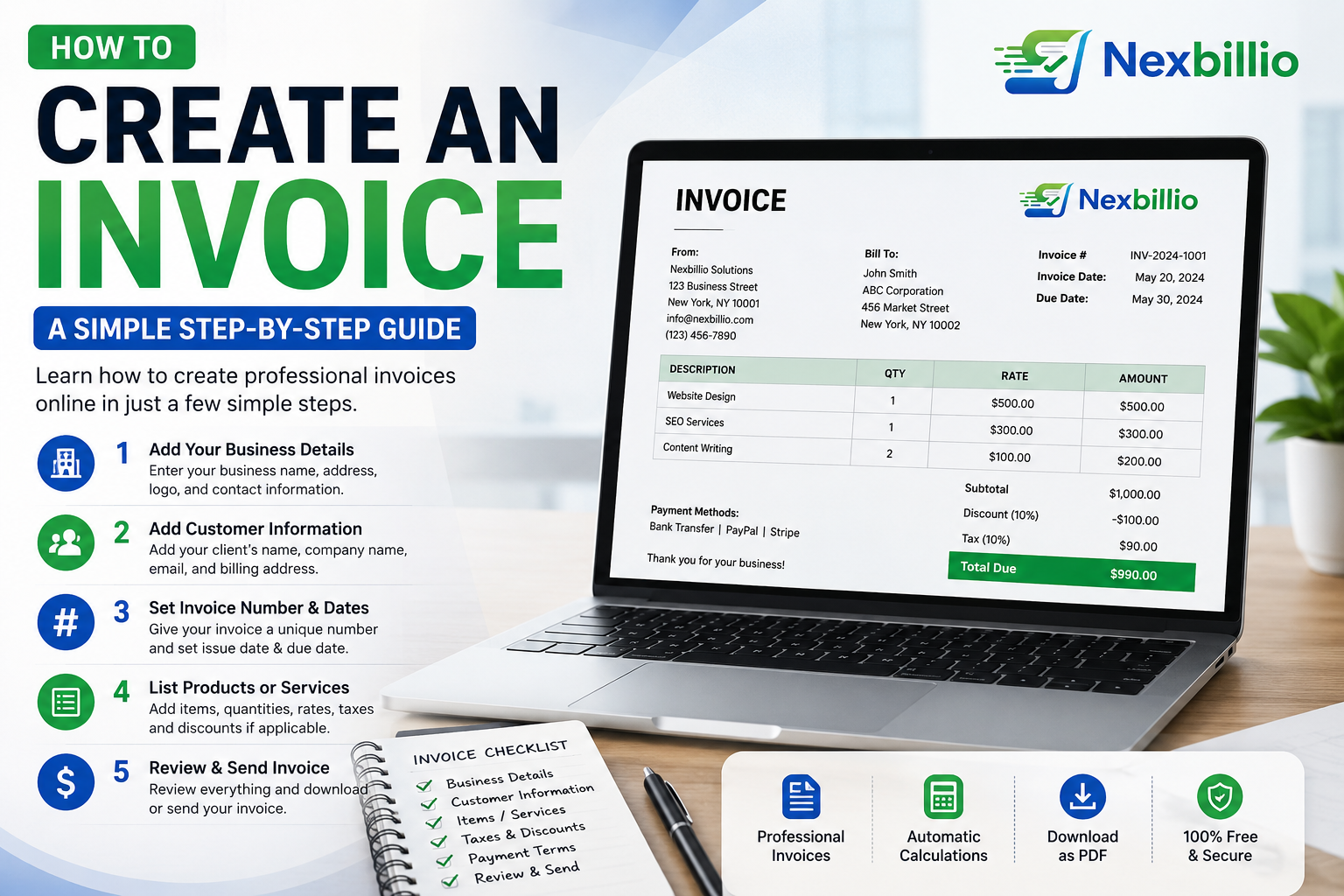
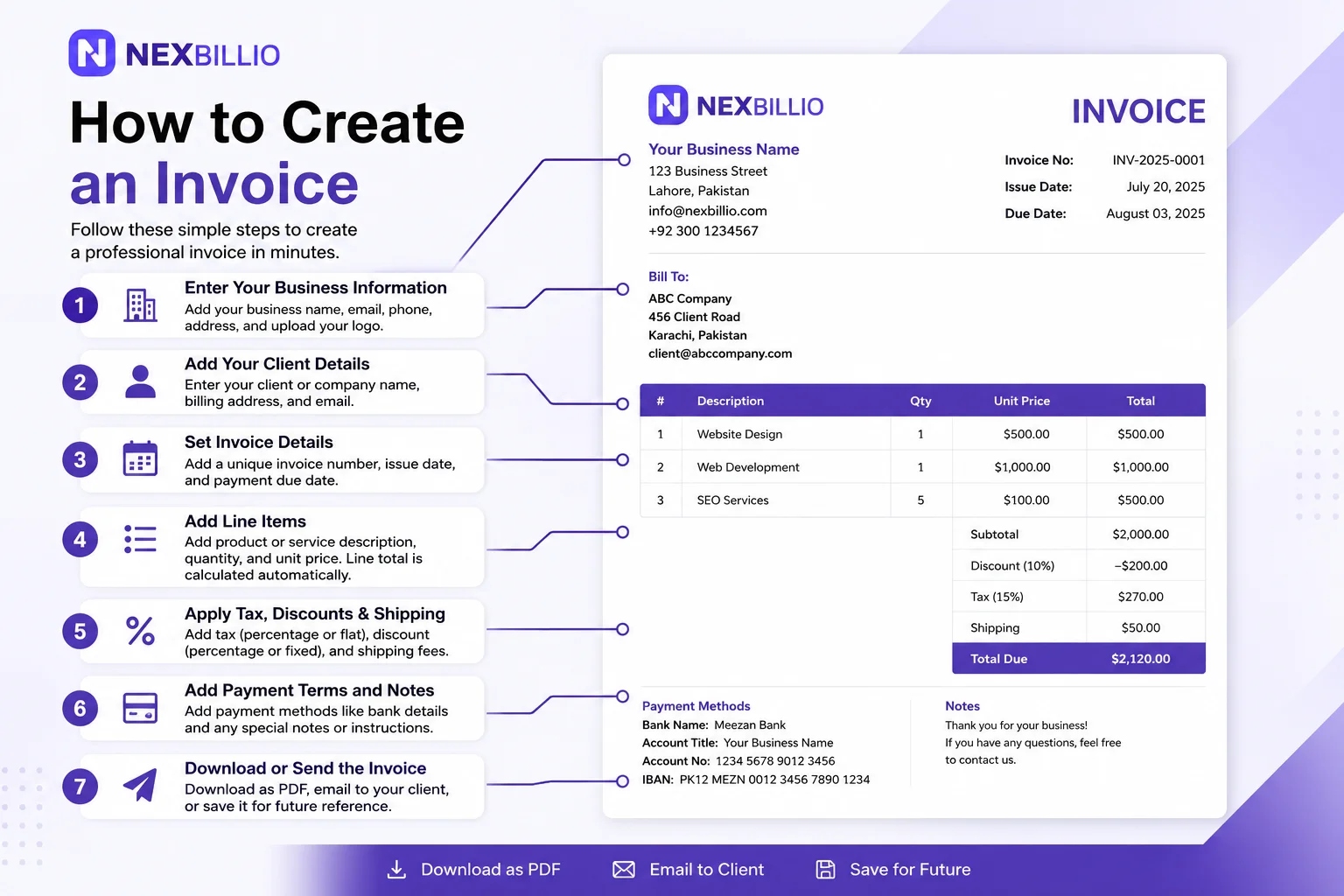
Creating an invoice does not have to be complicated. Whether you are a freelancer, contractor, consultant, online seller, photographer, designer, or small business owner, an invoice gives your customer a clear explanation of what they are paying for, how much they owe, and when the payment is due. A good invoice is more than a simple payment request. It gives your customer the information they need to review the charges, understand the total, and complete the payment without having to come back to you for missing details. A clear invoice can also make your business look more organized and professional. Many people still create invoices using spreadsheets or by editing an old document every time they receive a new order or complete a project. While that approach may work for occasional billing, it can become frustrating as your workload increases. A wrong total, duplicate invoice number, missing tax, or unclear payment instruction can easily lead to unnecessary emails and payment delays. A simpler option is to create an invoice online using an invoice generator or invoice creator. Instead of designing the document from scratch, you enter your business and customer information, add the products or services, review the calculations, and generate a finished invoice that is ready to send. What Is an Invoice? An invoice is a document that a business or professional sends to a customer to request payment for products or services that have been provided or agreed upon. A typical invoice contains the seller’s information, the customer’s details, a list of products or services, prices, applicable taxes or discounts, the total amount due, and payment terms. The exact format can vary depending on the business, industry, and location, but the main purpose remains the same: to make the transaction easy to understand. For example, a web designer may create an invoice for a website project, while a contractor may use one to bill for completed work and materials. A consultant might charge by the hour or by project, while an online seller may list individual products, quantities, and prices. Regardless of the business type, the customer should be able to look at the invoice and quickly understand what the charge represents. How to Create an Invoice Online Creating an invoice online is usually much easier than starting with a blank document. An online invoice creator gives you a structured format, while you simply provide the information needed for the transaction. The process is straightforward, but each section matters. Taking a little time to enter accurate information at the beginning can prevent problems later. 1. Add Your Business Information Start by adding the information that identifies your business. This normally includes your business name, contact information, address, and any relevant tax or registration details. You can also add your company logo to make the invoice consistent with your brand. Your business information should remain consistent across your invoices. When a customer opens the document, they should immediately know who sent it and how to contact you if they have a question about the bill. Common details include: 2. Add Your Customer’s Details The next step is to enter the information for the person or company you are billing. Depending on the type of transaction, you may need the customer’s name, company name, email address, phone number, and billing address. Accuracy is especially important here. A simple spelling mistake in a company name or incorrect billing information can cause problems when an invoice reaches a customer’s accounting department. 3. Give the Invoice a Unique Number Every invoice should have a unique number so that you and your customer can identify it easily later. You can keep the system very simple, such as INV-001, INV-002, and INV-003, or create a format that includes the year or another reference. For example, you could use 2026-001, 2026-002, and 2026-003. There is no need to make the numbering system complicated. The main goal is to keep it consistent and avoid using the same number for different invoices. Having a unique number is also useful when you need to check whether an invoice has been paid, follow up with a customer, or locate an old document. 4. Add the Invoice Date and Due Date The invoice date tells the customer when the invoice was issued, while the due date tells them when payment is expected. Both should be easy to find on the document. For example, an invoice could show: Invoice Date: September 3, 2026Due Date: September 17, 2026 A specific due date is much more useful than simply writing “Please pay soon.” Depending on your agreement with the customer, you may also use payment terms such as due on receipt, Net 7, Net 15, or Net 30. The payment terms should always match what you have agreed with the customer before the invoice is issued. 5. List the Products or Services The line-item section explains exactly what the customer is being charged for, so it deserves careful attention. Avoid descriptions that are too vague because the customer should not have to guess what a particular charge means. For instance, instead of writing “Design work — $800,” provide a clearer breakdown such as “Website homepage design — $400,” “Mobile layout design — $200,” and “Website revisions — $200.” For hourly services, you can also show the number of hours and the rate. A line such as “10 hours × $50 = $500” gives the customer enough information to understand how the amount was calculated. Clear line items make an invoice easier to review and can reduce unnecessary questions before payment. 6. Check Quantity and Unit Price Each line item should have the correct quantity and unit price. When an invoice contains several products or services, showing these details separately makes the final total much easier to verify. For example: Description Quantity Unit Price Logo design 1 $250 Social media banners 5 $40 Brand guide 1 $150 An invoice builder can be especially useful here because it can calculate line totals and the overall … Read more

Free Invoice Generator Online: How to Pick the Right One in 2026

Free invoice generator online - how to choose the right invoicing tool

Type “invoice generator” into Google and you’ll get roughly forty tools claiming to be the fastest, simplest, or most professional option out there. Some are genuinely free. Some say “free” and then ask for your card details on the download screen. A few dress themselves up as “AI invoice generators” without actually doing anything an AI needs to do. If you’ve landed here because you just want to bill a client today and you’re tired of comparing tabs, this guide should save you the trial-and-error. We’ll break down what actually makes a free invoice generator worth using, where a lot of tools quietly fall short, and how to tell within thirty seconds whether the one you’ve opened is right for the job in front of you. What “Free Invoice Generator” Actually Means (Because It’s Not Always Free) Before picking a tool, it’s worth being clear about what separates a genuinely free invoice generator from one that just uses the word “free” as bait. A tool earns the label if it lets you: A lot of tools fail on at least one of these. Some cap you at a couple of free invoices a month. Some strip your logo unless you upgrade. Some require an account and email verification just to unlock the download button, which defeats the point if you needed the invoice five minutes ago. NexBillio: The No-Signup, No-Cap Option NexBillio sits firmly in the “just get it done” category. You open the tool, fill in your business and client details, add line items, and download a finished PDF invoice. No account, no email verification, no invoice limit. What stands out: The trade-off is honest: NexBillio doesn’t save your client list between sessions or send automatic payment reminders, because it isn’t trying to be a full accounting system. It’s built for people who want a clean, correct invoice fast, not a dashboard to log into every morning. The Other Two Types of “Free” Invoice Tools You’ll Run Into Search around long enough and you’ll notice free invoicing tools generally fall into two other buckets, beyond a standalone generator like NexBillio. All-in-one accounting suites. These bundle invoicing together with client management, recurring billing, a customer portal, and time tracking, all wrapped inside a login you have to create and maintain. They’re genuinely feature-rich, and if you’re already running your business through that ecosystem’s other apps, the invoicing piece slots in neatly and shares your data automatically. Where it gets less convenient is for someone who just needs one invoice today, without any long-term commitment. Getting the full feature set means setting up an account first, and the interface is usually dense, built for people willing to spend time learning where things live. Payment-app companion generators. Some money-transfer and payment platforms offer a basic invoice generator as a side feature, mainly so you can bill a client and reference your payment details in the same document. These are convenient if you’re already using that payment app day to day, but they tend to have real limitations once you dig in: uploaded logos not always rendering correctly, no ability to set a different tax rate per line item, and a fairly limited choice of templates compared to a dedicated invoicing tool. They work best as a lightweight add-on to a payment account, not as a standalone invoicing solution for a business with varied billing needs. Neither type is “bad”, they’re just built for a different job than a quick, one-off invoice. Side-by-Side Comparison Feature NexBillio All-in-One Accounting Suite Payment-App Generator Signup required No Yes Account helpful, not always required Invoice cap None Generous, usage-based None advertised Per-item tax rates Yes Yes No Logo upload Reliable Yes Inconsistent, per user reports Multi-currency 100+ currencies Yes Strong, tied to the payment account Document types Invoice, quote, receipt, proforma, estimate, credit note Invoice, quote, recurring billing Mainly invoices Best for Quick, one-off, professional invoices Repeat clients needing a full system Users already inside that payment ecosystem What About “AI Invoice Generators”? You’ll see more tools branding themselves as AI invoice generators these days, and it’s worth being honest about what that actually means. For a standard invoice, the heavy lifting, calculating totals, applying tax, formatting line items, doesn’t need artificial intelligence. A well-built calculator and a clean template already do that job accurately. Where AI genuinely adds value is in different tasks entirely: scanning a pile of receipts and auto-categorizing expenses, pulling line items out of a messy email thread, or flagging anomalies across hundreds of invoices in a large business. If you’re creating a single, clean invoice for a client, the “AI” label is often more marketing than function. What actually matters is whether the tool calculates correctly, looks professional, and gets to your client without friction. Invoice Generator vs. Excel or Word Templates A fair number of people searching for an invoice generator are really deciding between a generator and a static template in Excel or Word. Both have a place: If you send more than the occasional invoice, a generator saves real time over re-doing the math in a spreadsheet every time a line item changes. A Note for US-Based Businesses If you’re invoicing within the US, keep in mind there’s no federal VAT system to account for, most invoices just need a clear subtotal, applicable state sales tax if relevant, and the total due. Compared to VAT-heavy markets like the UK or EU, US invoices tend to be simpler to format, which is one reason a lightweight generator often covers everything a US freelancer or small business needs without extra complexity. Simple vs. Professional: Picking the Right Invoice Style “Simple invoice generator” and “professional invoice” show up as two different searches, but they’re really two ends of the same spectrum. A simple invoice strips things down to the essentials: business name, client name, line items, total. A professional invoice adds branding, a logo, consistent formatting, and sometimes a short payment terms section. The good news is you don’t have to … Read more

Invoice Templates for Every Industry: Trucking, Medical, Catering, Electrical, Legal & More

A trucking company and a bakery both send invoices, but they don’t send the same invoice. One needs load numbers, mileage, and delivery dates. The other needs order details and maybe a note about a standing weekly account. Generic advice like “just fill in a template” only gets you halfway. The fields that actually matter change depending on what you do for a living. This guide walks through how to build an invoice properly, then breaks down what to include for a handful of specific industries, trucking, electrical, medical, catering, legal, and more. So you’re not guessing which fields your invoice is missing. How to Create an Invoice, the Short Version Before getting into industry specifics, here’s what every invoice needs regardless of what you sell: That’s the skeleton. If you’re wondering how to create a business invoice for the first time, starting with these seven fields covers you legally and practically in almost any industry, before you add anything specific to your trade. Free Invoice Maker vs. Word, Excel, or InDesign Templates There are three broad ways people put an invoice together, and each comes with trade-offs worth knowing before you pick one. A free online invoice maker (like a browser-based generator) calculates totals and tax automatically, formats everything consistently, and exports straight to PDF. You don’t need design skills or spreadsheet formulas, you fill in fields and download. Word or Google Docs templates are easy to open on any device and simple to edit by hand, but they don’t calculate anything. If you’re wondering how to create an invoice in Word, the honest answer is: it works fine for a handful of invoices a month, but you’re doing the math yourself, and one wrong subtotal can mean an underbilled client. Excel templates let you build formulas so totals update automatically, which is genuinely useful if you know your way around spreadsheets. The catch is that formatting breaks easily; add or delete a row and suddenly your borders or totals are off, and you’re troubleshooting a spreadsheet instead of running your business. Design tools like InDesign give you the most control over layout and branding, which some larger businesses use for a polished, print-ready look, but it’s overkill for sending a routine invoice, and most clients care more about clarity than typography. If you’re asking “is there a free invoice maker that just works without a learning curve,” a browser-based generator is usually the fastest answer, especially once you’re sending more than two or three invoices a month. Industry-Specific Invoice Templates Here’s where the details actually change based on what you do. Trucking and Transport Invoices A trucking invoice sample needs more logistics detail than a standard service invoice. Include: Transport invoices in general benefit from a clear breakdown between the base rate and any additional charges like waiting time or extra stops, since disputes in this industry usually come down to “what was actually agreed on” versus what showed up on the final bill. Electrical, Flooring, and Contractor Invoices An electrical invoice template or a flooring installation invoice template should separate labor from materials clearly. Clients want to see: The same structure applies well to a garage invoice template or a concrete invoice, jobs where the client is paying for both physical materials and skilled labor, and wants to see what portion of the bill covers each. Medical Invoices A medical invoice carries more compliance weight than most other categories. Depending on your region, this typically needs: Because of privacy regulations in most regions, medical invoices also need careful handling of what personal information gets included and how the document is stored or transmitted. Restaurant, Catering, and Bakery Invoices A restaurant invoice generator setup is usually simpler than the categories above, but catering and bakery orders often involve advance deposits and event-specific details. For a catering invoice, include: A bakery invoice for a custom order (a wedding cake, for instance) benefits from the same deposit-versus-balance structure, since custom food orders are rarely paid in full upfront. Legal and Bookkeeping Billing A legal billing template usually bills by the hour or by a flat fee per matter, and clients expect transparency on both. Include: A sample bookkeeping invoice follows a similar logic: separate the recurring monthly fee (if you charge one) from any one-off work, like a specific reconciliation project or year-end cleanup, so the client can see exactly what they’re paying for each month. Musicians, Tutors, and Freelance Creatives A musician invoice template typically covers a single gig or a series of bookings. Useful fields include: A sample tutoring invoice works well with a similar structure: session date, duration, hourly rate, and a running note if you’re invoicing for a block of sessions rather than one at a time. VAT and UK-Style Commercial Invoices If you’re invoicing in the UK or anywhere with VAT, a standard invoice needs extra fields that don’t apply in the US. A proper VAT invoice template includes: A commercial invoice template in Word format is common for cross-border shipments too, since customs authorities often want to see the goods description, value, and country of origin clearly laid out, separate from a standard domestic invoice example UK businesses use for local clients. Beyond the Invoice: Quotes, Proforma, and Receipts Invoicing rarely happens in isolation. Most businesses move through a small family of related documents before and after the invoice itself: Using one tool that generates all of these in a consistent format (rather than a separate template for each) keeps your documents looking like they came from the same business, which matters more than people expect when a client is comparing paperwork from several vendors at once. Making Repetitive Billing Less Manual If you’re issuing the same type of invoice regularly, whether that’s an automated invoice template for a subscription service or a recurring bill for a maintenance contract, a few habits cut down on repeated manual work: On the “AI invoice template” trend: some tools now market AI-assisted invoice creation, mainly auto-filling … Read more

Best Invoicing Software for Freelancers in 2026

Best invoicing software for freelancers 2026 comparison

Somewhere between finishing the project and getting paid for it, most freelancers lose momentum. The work’s done, the client’s happy, and then invoicing turns into an afterthought scribbled in a Google Doc or, worse, a half-remembered template from three clients ago. It’s not that freelancers don’t care about getting paid. It’s that invoicing sits at the exact point in the workflow where nobody wants to spend more time than necessary. The good news is that the invoicing software market in 2026 is genuinely crowded, which means there’s something for almost every situation, from a photographer billing five clients a year to a consultant juggling forty. The tricky part is figuring out which tool actually fits you, instead of paying for a bloated platform built for a ten-person agency. Here’s a straight breakdown. What You’re Actually Comparing Before getting into specific tools, it helps to know what separates them, because “invoicing software” covers a wide range of products: None of these is objectively “the best.” The right one depends on how many clients you have, whether you bill hourly or per project, and how much you actually want to manage inside the invoicing tool itself. The Free-Tier Trap Worth Knowing About Here’s something most comparison articles gloss over: a lot of “free” invoicing software isn’t free in practice once you look closely. None of this makes those tools bad, most are genuinely well built. But if you’re a freelancer who bills six or seven clients a year and just needs a clean, professional invoice each time, paying a monthly fee (or hitting a client cap) for features you’ll rarely touch, like recurring billing automation or built-in payment processing, doesn’t make a lot of sense. When a Free Invoice Generator Beats a Full Platform If your invoicing needs are straightforward, create a professional bill, apply the correct tax, send it, get paid, a dedicated invoicing platform can be overkill. This is where a tool like NexBillio fits in differently from the subscription-based names above: The honest trade-off: you won’t get a saved client database, automatic payment reminders, or recurring billing that fires off invoices on a schedule. If retainer clients and automated follow-ups are central to how you work, a paid platform earns its cost. But if most of your billing is one project at a time, a free generator does the job without you paying a monthly fee for features that sit unused. Comparing the Options at a Glance Tool Free Tier Client Limit Best For NexBillio Fully free None One-off invoices, freelancers with variable client counts Zoho Invoice Free 5 clients Freelancers with a small, stable client base Wave Free (fees on payments) None Freelancers who want basic bookkeeping alongside invoicing Invoice Ninja Free 5 clients Freelancers who prefer open-source, self-hosted tools FreshBooks Paid only Plan-based Freelancers wanting automated reminders and polish Bonsai / Plutio Paid only Plan-based Freelancers who also need contracts, proposals, and CRM How to Actually Pick One A few honest questions, rather than a generic checklist, tend to narrow this down fast: A Quick Word on Getting Paid Faster Whichever tool you land on, a handful of habits move the needle more than the software itself: The Bottom Line There isn’t a single “best” invoicing tool for freelancers, only a best fit for how you actually work. If you’re managing a steady roster of retainer clients and want automated reminders, a paid all-in-one platform like FreshBooks or Bonsai will likely pay for itself. If your billing is more irregular, project by project, client by client, a free, no-signup invoice generator like NexBillio gets you a professional, accurate invoice in a couple of minutes without adding another subscription to the pile. Try a couple of tools before settling. Most of the free tiers cost nothing to test, and the right fit usually becomes obvious after your second or third invoice.

Complete Invoice Generator Guide for Small Business and Freelancers

Tips to get paid faster

Your biggest frustration probably isn’t actually invoicing. It’s getting paid. You finish a project. You send an invoice. Then you wait. And wait. Two weeks pass. You send a reminder. Another week. Finally, payment arrives. You just lost 20-plus days of cash flow because of administrative friction. For freelancers and small business owners, cash flow isn’t theoretical. It’s rent, payroll, suppliers, and survival. Getting paid on time isn’t a nice-to-have — it’s essential. The right invoicing strategy, starting with the right tool and process, can compress this timeline dramatically. Research shows that businesses using professional invoice generators get paid 20 to 30 percent faster than those using informal methods. For a freelancer invoicing $10,000 monthly, 30 percent faster payment means $30,000 additional working capital flowing through your business yearly. This guide walks through exactly how small businesses and freelancers should think about invoicing, which tools work best, and how to optimize your entire invoicing process for speed and reliability. Invoice Generators For Freelancers & Businesses Why Invoicing Directly Impacts Your BusinessInvoicing isn’t just administration. It’s a business strategy. Cash flow is survival. Every day you wait for payment is money you can’t invest in inventory, equipment, or team. Freelancers and small businesses operate on thin margins. Cash delays create stress and limit growth. Professional invoicing accelerates payment. Studies from the Association for Financial Professionals show professional invoices get paid 23 percent faster than informal ones. The gap between a quality invoice and a sloppy one is 20-plus days of waiting. Invoicing systems scale automatically. As your business grows, manual invoicing becomes impossible. A system that works for 5 clients breaks at 50 clients. The right tool scales effortlessly. Documentation protects you legally. Professional invoices create a paper trail. If a client disputes payment, argues about scope, or files bankruptcy, you have documentation proving the work, rates, and terms agreed. Invoicing data informs business decisions. Organized invoicing reveals which clients pay slowly, which projects are most profitable, and where you waste time. Professional invoices build trust. Clients take professional invoices more seriously than casual payment requests. A polished invoice signals legitimacy — clients pay the serious person who looks organized. The bottom line: invoicing isn’t paperwork. It’s cash flow management and business strategy wrapped into one process. The Freelancer Invoicing ChallengeFreelancers face unique invoicing challenges compared to traditional businesses. Irregular income means some months you bill $15,000, others $5,000. You can’t predict exactly when payment arrives, creating budgeting challenges. Professional invoicing systems help you forecast based on due dates rather than hoping payment will arrive. Multiple client payment preferences create chaos. Client A pays via bank transfer, Client B wants PayPal, Client C mails checks. Consolidating payment information in invoices prevents confusion. Scope creep and billing disputes are common. “I thought you included revisions” is a familiar conflict. Detailed invoices listing exactly what’s included prevent these disputes. Clear itemization means fewer arguments about what was promised. No accounts payable department means freelancers are the sole person responsible for invoicing, following up, and tracking payment. Automated reminders and organized systems are essential. Tax complexity adds another layer. Many freelancers operate across multiple jurisdictions — local, national, sometimes international clients. Managing different tax requirements in one invoicing system is critical. Late payment stress is real. When income is irregular, late payment creates genuine stress. Getting paid 3 weeks early rather than 3 weeks late is life-changing for cash flow. The Small Business Invoicing StrategySmall business owners face different but equally real challenges. Growing invoice volume is inevitable. You start with 5 clients. Two years later, you have 50. A system that worked for 5 breaks at 50. You need a tool that scales without requiring you to hire bookkeeping staff. Multiple team members need access. Your assistant sends invoices, your partner reviews payments, your accountant needs records. You need a system multiple people can access and update. Tax and compliance requirements are formal. You need invoices that properly track revenue, calculate tax correctly, and generate records for audits. Connecting invoicing to accounting becomes necessary as you grow. Invoicing connects to accounting, inventory if you sell products, expense tracking, and financial reporting. A system that integrates all this prevents errors and saves time. Cash flow forecasting becomes possible with organized invoicing. An organized system enables accurate cash flow projections, which drives better business decisions. Client relationships depend on professionalism. A business that sends clear, professional invoices looks more trustworthy than one with inconsistent formatting. Choosing Between Invoice Generator TypesDifferent situations call for different tools.Simple invoice generators like Nexbillio and Invoice Generator are perfect if you invoice less than 50 times per month, invoice individually rather than on a recurring schedule, don’t need payment collection, want minimal setup time, and prefer simplicity over features. Simple tools work great as long as invoicing volume stays manageable. Feature-rich free platforms like Zoho Invoice and Wave make sense if you invoice 50 or more times monthly, need recurring invoices, want payment collection features, need invoicing plus basic accounting, or have multiple team members. These platforms handle volume better and include features that save time at scale. Premium invoicing software like FreshBooks or QuickBooks Online becomes necessary if you invoice 500 or more times monthly, need advanced accounting integration, require multi-location or multi-entity support, have complex tax requirements, or need dedicated support. Most small businesses never reach this level. Building Your Invoicing SystemHaving the right tool matters. Having the right process matters more. Here’s how to build a system that accelerates payment. Start by setting up your defaults once. Take 30 minutes upfront to enter your business name, address, logo, payment methods, payment terms, and standard notes. These become defaults for every invoice, so perfect them once and you’re done. This initial investment pays dividends because every invoice going forward takes 2 minutes instead of 5. Multiply by 100 invoices and you’ve saved 300 minutes of work annually. Establish clear payment terms upfront. Before starting any project, confirm payment terms with the client. Is it 15, 30, or … Read more

Best Free Invoice Generators and Templates

free invoice generator features

You’re drowning in payment administration. Clients ask “Where’s my invoice?” Multiple tools scattered across your computer. Payment tracking is chaos. You need invoicing solved — now. The good news? Free invoice generators have evolved significantly. What started as basic PDF templates has become sophisticated, professional tools that rival paid software. Many are completely free, require no signup, and get the job done in minutes. But not all are created equal. Some are overly complicated. Others are too minimal. Some push paid upgrades relentlessly. Finding the right one matters because invoicing isn’t a one-time task — it’s something you’ll do repeatedly. Choose wrong, and you’ll waste time every single week. We’ve tested the leading free invoice generators and compared them directly. This guide shows you exactly which tool works best for different situations, what you get for free, and where each one excels or falls short. What to Look for in an Invoice GeneratorBefore we compare tools, understand what actually matters when choosing an invoice generator. Ease of use beats everything. If the tool requires a Ph.D. in accounting to operate, you won’t use it. The best invoice generator is one so intuitive that you create an invoice faster than you could write an email. Look for tools with a clean interface, logical flow, and minimal required fields. No signup required saves time. Some generators let you create invoices instantly without creating an account. Others force signup before you do anything. Free tools that require no signup let you test them immediately. Account-based tools store your history and templates, which is convenient once you commit. Professional templates matter because appearance affects payment. Research shows professional invoices get paid 20 to 30 percent faster than generic ones. The tool should offer multiple template designs so you can choose one matching your brand. Customization options let you add your logo, set colors, and include specific information. Basic customization — logo, business name, colors — should be included free. Advanced customization might require paid plans. Mobile-friendly creation is increasingly important. Can you create invoices from your phone? Can clients view invoices on mobile? Mobile-first design means you can invoice from anywhere, not just your desk. Export options matter. Can you download as PDF? Could you export to other formats? Can you print directly? Multiple options give you flexibility for different situations. Payment features vary. Some tools let you collect payment directly through the invoice. Others just create the document. Decide if payment collection is important now or something you’ll add later. Data security and privacy can’t be overlooked. Where is your data stored? Free tools sometimes sell your data or display ads. Verify privacy policies before trusting sensitive client information. Support and resources help when you get stuck. Good support saves time and frustration. Free Invoice Generators Compared Head-to-Head 1. Nexbillio — Best Overall for SimplicityNexbillio is a browser-based invoice generator designed for simplicity. No desktop software, no installation, works on any device with a browser. What’s free: Unlimited invoice creation, professional templates, PDF download, multiple currencies, tax calculations, and all core features at no cost. Best for: Freelancers, small businesses, or anyone wanting straightforward invoicing without complexity. Perfect if you want to start immediately without signup. It works in-browser with zero setup required, offers multiple professional templates to choose from, supports 100-plus currencies, and has a clean minimal interface that won’t confuse beginners. There are no annoying upsells or limitations either. From landing on the site to downloading your first invoice takes 2 to 3 minutes. No account creation, no confusing options, no bloat. The limitations: No payment collection built-in, no client portal, no recurring invoice automation. These are paid features or not available. If you need those features, you’d upgrade or switch tools. For straightforward, fast invoicing, Nexbillio hits the sweet spot. It does one job exceptionally well without trying to be an entire business suite. 2. Zoho Invoice — Best for Full FeaturesZoho Invoice is part of Zoho’s business suite. It’s a full-featured invoicing platform with free and paid tiers. What’s free: Up to 1,000 invoices per year, unlimited clients, basic templates, expense tracking, time tracking, and online payment acceptance. Mobile app access included. Best for: Growing businesses, businesses that already use Zoho products, or anyone wanting invoicing plus accounting basics. Good if you’re building a business system, not just creating invoices. The free tier is genuinely powerful. You can accept payments directly through invoices, track time for service-based businesses, automate recurring invoices, give clients a portal to view invoice status, and access over 80 professional templates with multi-language support. Customization is excellent. You can customize nearly everything — invoice layout, custom fields, branded colors, email templates. You have the control of a paid system, free. Initial setup takes 10 to 15 minutes since you need to create an account and configure settings. After that, creating invoices is fast. The limitation is the 1,000 invoice per year cap. If you invoice more than about 83 invoices monthly, you’ll need a paid plan. 3. Invoice Generator — Best for MinimalistsThis is a no-frills, browser-based invoice tool. Literally just for creating invoices. Nothing else. What’s free: Complete invoice creation, PDF download, multiple currency support, unlimited invoices, zero cost, zero signup required. Best for: Extremely simplified needs — someone who just wants to create a quick invoice without any extra features. Also good for privacy-conscious users since no data is stored. Zero signup required means instant access. The interface only shows essential fields. It’s extremely lightweight with no tracking or ads, and completely privacy-friendly. From clicking the link to downloading a complete invoice: 60 to 90 seconds. The limitations are intentional. No logo upload on the free version, no recurring invoices, no payment collection, no client portal. It’s a one-trick pony, but it does that trick very well. 4. Wave — Best for Integrated AccountingWave is a Canadian accounting software platform with free invoicing, accounting, and payment collection. What’s free: Unlimited invoices, unlimited users, client portal, payment acceptance, expense tracking, basic financial reporting, … Read more

How to Create Professional Invoices Online: Complete Step-by-Step

How to create free invoice online

Invoicing doesn’t need to be complicated or expensive. Whether you’re a freelancer managing five clients, a small business owner handling multiple projects, or a startup looking to streamline operations, knowing how to create professional invoices online can save you time and help you get paid faster. The best part? You can do this completely free. This guide walks you through everything you need to know — from understanding invoice basics to generating your first professional invoice in minutes. We’ve included real examples, best practices, and exactly what to include so your invoices look credible and encourage faster payment. Why Creating Professional Invoices Matters Before we jump into the “how,” let’s talk about the “why.” An invoice is more than just a payment request. It’s often your first formal touchpoint with clients after the work is done. A well-crafted invoice does more than ask for money — it builds trust, speeds up payment, and protects your business. It sets professionalism expectations. Clients notice when you send polished, organized invoices. It signals that your business is legitimate and organized, which builds trust and confidence. Sloppy invoices raise red flags — even if your work was excellent. It accelerates payment. Studies show that professional, clear invoices get paid 20 to 30 percent faster than generic ones. Clients understand exactly what they owe, when it’s due, and how to pay you. No confusion means no delays. It protects your business legally. A proper invoice documents the transaction, creates a paper trail, and protects you in disputes. It shows the work performed, rates agreed, payment terms, and dates — all crucial if you ever need to follow up on late payments. It simplifies tax time. Instead of digging through emails and scattered notes, you have organized records of every transaction. This makes filing taxes, calculating income, and tracking expenses straightforward. It enables business growth. As you grow, you need systems that scale. Building good invoicing habits early means you can automate and streamline later without starting from scratch. What Every Professional Invoice Must IncludeAn invoice without the right information creates confusion and delays payment. Here’s what belongs on every invoice you send. Your business information sits at the top. This includes your business name, address, phone number, and email. If you’re a freelancer, this is your personal info and possibly your business name. Clients need to know exactly who to contact with questions. Your invoice number uniquely identifies each invoice. Number them sequentially — 001, 002, 003, and so on. This makes tracking invoices easy and looks professional. It also helps you reference specific invoices in follow-up conversations. The issue date tells clients when you sent the invoice. The due date is equally important — it tells them when they need to pay. Most businesses use 15, 30, or 45-day payment terms, depending on the client relationship and industry norms. Client information includes their name, business name if applicable, address, and contact details. Make it clear who the invoice is for. If you work with large organizations, include the specific department or person responsible for payments. Itemized description of work or products breaks down exactly what you’re billing for. Don’t just write “Services.” Instead write “Website design consultation — 3 hours at $75/hour” or “Content writing — 5 blog posts.” Be specific. Vague descriptions create questions and delay payment. Quantity and rate show how you calculated each charge. Include hourly rates, project fees, or per-unit pricing. This transparency eliminates negotiation after the work is complete. Clients know upfront what they’re paying for. Subtotal, taxes, and total amount are calculated automatically by invoice generators, but they’re critical. Show the subtotal before tax, then list any applicable taxes, fees, or discounts separately. The total at the bottom should be unmistakable. Payment terms and methods tell clients how and when to pay. Do you accept bank transfers, credit cards, PayPal, checks? What’s your payment deadline? Write something like “Payment due within 15 days of invoice date. Please send payment to [your payment details].” Notes or terms and conditions are your final chance to set expectations. You might write “Thank you for your business” or include a note about late payment fees. This is also where you’d mention any refund or revision policies. 5-Minute Steps to Create Your First InvoiceCreating an invoice online is actually faster than you’d think. Here’s exactly how to do it. Step 1 — Choose your invoice generator. You have options here. Free online tools like Nexbillio, Invoice Generator, Zoho Invoice, and Wave all offer free invoice creation without requiring credit card information. Pick one that feels intuitive to you. The best tool is the one you’ll actually use consistently. Open the tool and look for “Create New Invoice” or a similar button. Don’t worry about perfection — you can adjust settings after trying the first one. Step 2 — Upload your logo and fill in business details. This takes 30 seconds but makes a huge visual impact. Upload a PNG or JPG version of your logo. Then enter your business name, address, phone, and email. This information appears at the top of every invoice you create from now on, so you only enter it once. Step 3 — Enter client information. Add who you’re billing. Enter their company name, contact person, address, and email. If you work with the same client repeatedly, their information is saved for future invoices. The client information section clearly distinguishes between who’s sending the invoice and who’s receiving it. Step 4 — Add invoice details and dates. Set your invoice number. Select the issue date and the due date, typically 15 to 30 days from now. Most generators calculate due dates automatically — just select your payment terms. These dates give clients a clear deadline and help you track payment timing. Step 5 — List your services or products. For each item or service, write a clear description of what you delivered, enter the quantity, and enter the rate. The total calculates automatically. Add multiple line items if … Read more

How to create a business invoice

How to create a business invoice

Introduction Whether you are a freelancer, small business owner or entrepreneur, knowing how to create an invoice the right way is essential to getting paid on time. A professional invoice is more than just a bill — it builds trust, ensures legal compliance and keeps your cash flow healthy. With our free invoice generator, you can create an invoice in minutes, no sign-up required.  Generate stunning invoices for PayPal, eBay, Stripe, QuickBooks, Shopify, and  Amazon with NexBillio. Designed for sellers and freelancers, our free invoice generator helps you create platform-ready invoices quickly and effortlessly. It is fast, simple, and 100% free. Stop wasting time on manual paperwork. Use this guide to generate invoices like a pro, whether you need a business invoice, an e-invoice or a simple freelance invoice template. Table of Contents 1. What Is an Invoice Generator? An invoice generator is an online tool or software that helps you quickly create, customize and download professional invoices. Instead of building a document from scratch, you simply fill in your details — client name, a unique invoice number, services, amounts — and the tool formats everything into a clean, ready-to-send invoice pdf or document. Modern invoice generators support features like: 2. Why You Need a Free Invoice Generator Creating invoices manually in Word or Excel is slow, error-prone and unprofessional. A free invoice generator solves all of that instantly. Here is why thousands of freelancers and businesses use one every day: Save Time Generate an invoice in under 60 seconds. No design skills needed, no formatting headaches.  Look Professional Pre-built invoice templates are clean, branded and trusted by clients. Get Paid Faster A clear, professional invoice reduces back-and-forth and speeds up payment. Stay Organized Automatically numbered invoices keep your records tidy for accounting and tax purposes.  Completely Free The best invoice generators are 100% free , no hidden charges, no subscription required to create and download basic invoices. 3. How to Create a Business Invoice A business invoice is slightly more formal than a freelance invoice and may include additional elements like your business registration number, VAT number or purchase order reference. Steps to Create a Business Invoice Business Invoice vs. Freelance Invoice Business invoices often require more compliance details (company number, VAT registration), while freelance invoices tend to be simpler. Both can be created using a free invoice generator in minutes. 4. How to Make an Invoice to Get Paid Faster Creating an invoice is only half the battle. Sending it the right way ensures you actually get paid on time. Here are proven strategies: 10 Tips to Get Paid Faster With Your Invoice 5. Why Our Free Invoice Generator Is #1 6. FAQs — Frequently Asked Questions  Q1: How do I make an invoice for free? Use our free invoice generator — just fill in your details, add your services and download a professional pdf invoice instantly. No sign-up required. Q2: What is the best free invoice generator? Our invoice generator is the best free option because it requires no account, has no hidden fees, generates invoice numbers automatically and lets you download clean pdf invoices instantly. Q3: What does an invoice need to include? Every invoice should include: your business details, client details, a unique invoice number, invoice date, due date, itemized list of services or products, subtotal, taxes, total amount and payment instructions. Q4: How do I make an invoice to get paid? Create a clear, professional invoice with an obvious due date and multiple payment options. Send it immediately after completing work, follow up politely and use short payment terms like Net 7 or Net 14. Q5: Do I need to sign up to use a free invoice generator? With our free invoice generator, no. You can create, customize and download a professional invoice without creating an account. Some tools like QuickBooks and FreshBooks require sign-up for full features. Conclusion Now you know exactly how to make invoices, how to create an invoice for free, how to generate invoice numbers and how to use platforms like Shopify, Amazon, eBay, PayPal and Excel for invoicing. Whether you are a freelancer sending your first invoice or a business managing hundreds of transactions, the right invoice generator makes the whole process fast, professional and stress-free. Our free invoice generator gives you everything you need — no sign-up, no fees, no limits. Create your first invoice in under 2 minutes and start getting paid like a professional today. Start Creating Free Invoices Now →